-
Email queenie@hellounipack.com
-
WhatsApp +8619807883476

Are Kraft Paper Coffee Bags Really Paper? (The Film Inside)
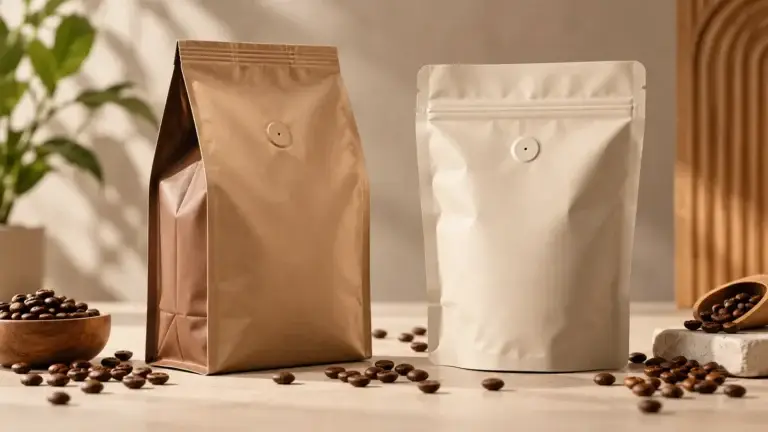
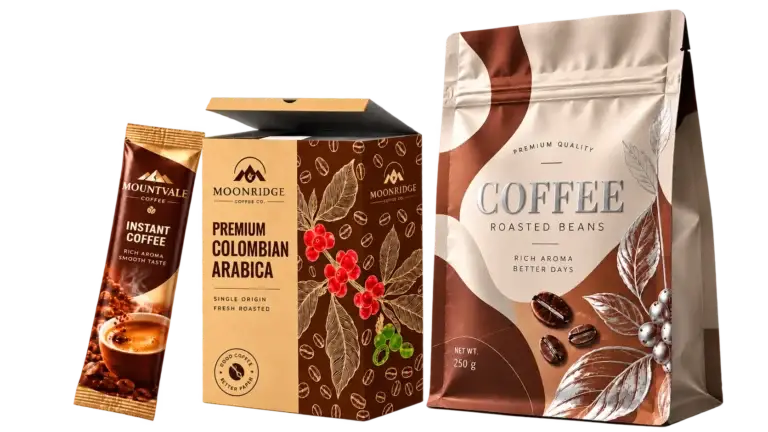
Kraft paper coffee bags look like paper, feel like paper and are usually sold as paper. Most of them are not — at least not entirely. A typical kraft coffee bag is a laminate: a printed kraft paper layer on the outside, an adhesive layer, a barrier film, and an inner sealant layer that actually touches the beans. The paper is the face; the film is the function. This guide explains what is really inside a kraft coffee bag, when a paper-first structure makes sense, and how to specify one that matches your barrier and sustainability goals.
What Is a Kraft Coffee Bag Actually Made Of?
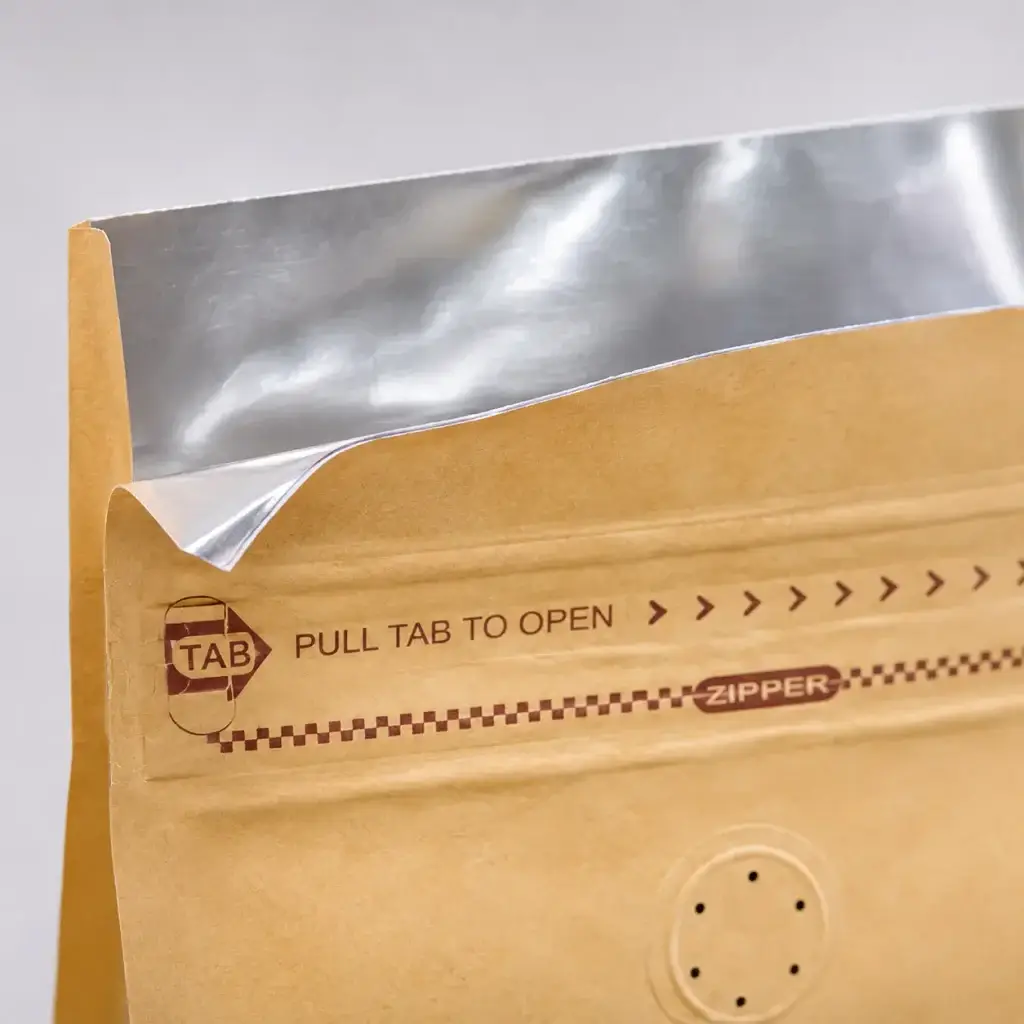
A coffee bag is not one material. It is a sandwich of layers, and each layer does a different job. Open the bag flat and you are looking at the paper on one side and the film on the other, bonded together across the whole surface — not a loose liner dropped inside.
The paper layer
Kraft paper is unbleached wood pulp, which is why it is brown rather than white. It gives the bag its stiffness and its matte look, it carries the print, and it protects the film underneath from scuffs and handling. On its own, though, paper has almost no barrier. It lets air and moisture straight through.
The film layer
The film is laminated to the inside of the paper. It is usually a thin multi-layer structure — most often PET, aluminium foil, and polyethylene, or a metallized PET replacing the foil where a lighter structure is needed. For compostable versions, the film is built from PLA or a similar compostable polymer instead. The film is what actually keeps the coffee fresh; the paper only makes the bag look and feel right.
The valve and the seams
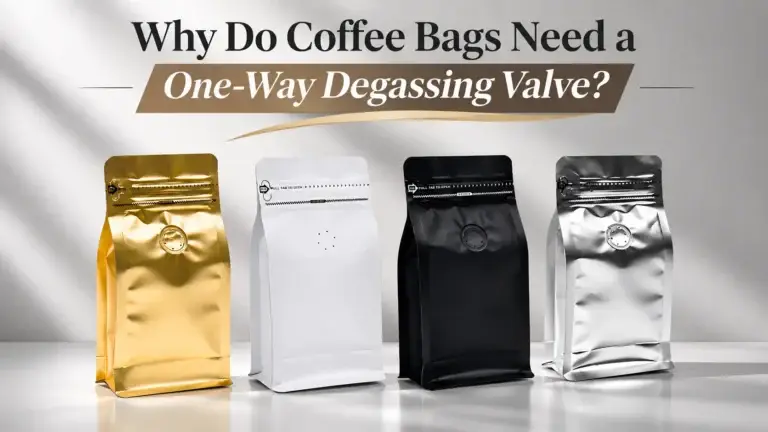
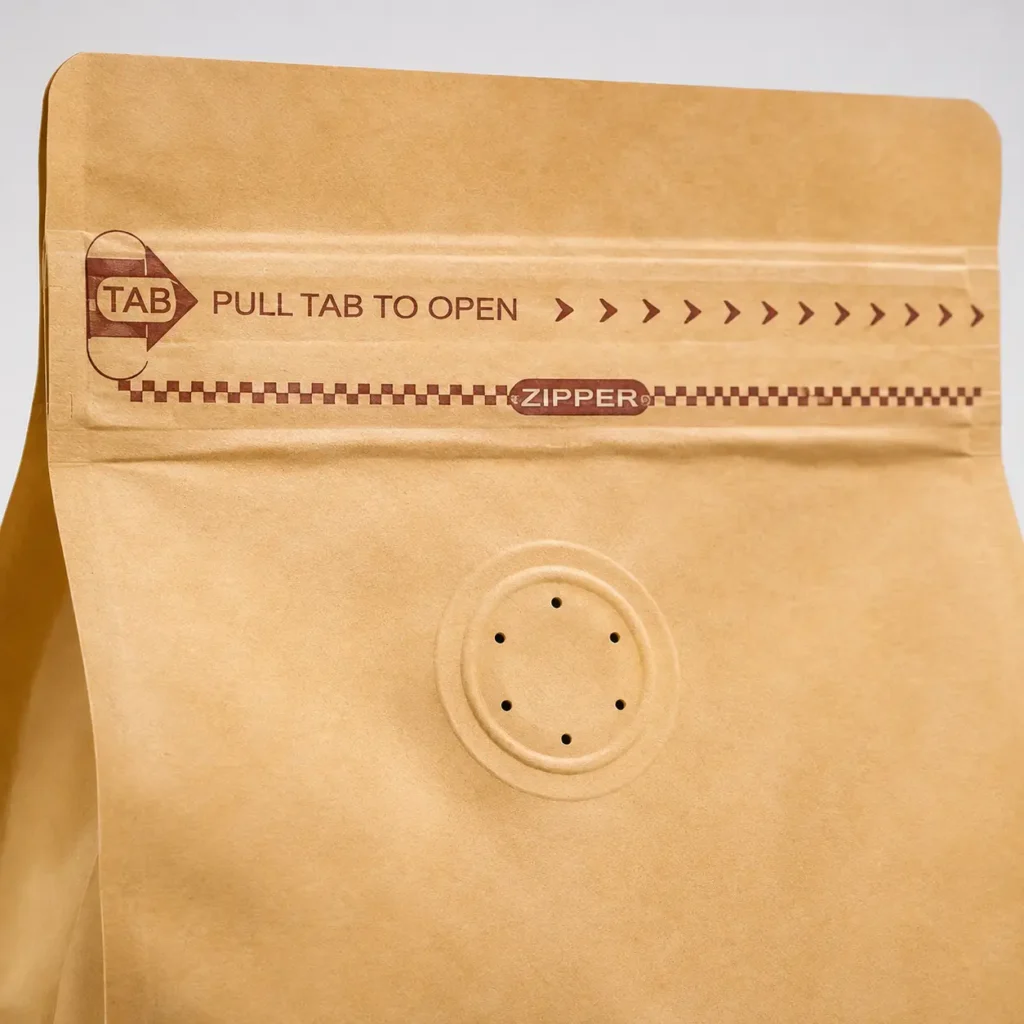
Most whole-bean bags also carry a one-way degassing valve on the front. It lets carbon dioxide escape after roasting while stopping outside air from coming back in. The seams — side gussets, bottom seal, top seal — are heat-sealed through the film layers, which is why a kraft coffee bag is sealed by melting plastic, not by gluing paper.
Why Does a Paper Coffee Bag Need a Film at All?
Because coffee is one of the most perishable products on a shelf. After roasting it keeps releasing carbon dioxide for several days, and at the same time it is damaged by four things that plain paper cannot stop:
- Oxygen — oxidises the oils and turns the flavour flat and papery.
- Moisture — migrates through paper freely and makes the beans go stale and soft.
- Aroma compounds — small volatile molecules that pass straight through uncoated paper.
- Light and oil — light accelerates staling, and coffee oils can wick through an unlined paper surface and stain it.
A paper-only bag fails on all four. That is why nearly every kraft coffee bag on a shelf is lined, and why a genuinely unlined paper bag is sold for short-term or whole-bean display use rather than for long shelf life.
What Does the Inner Film Actually Do to Your Coffee?
Oxygen is the real enemy
The film is the oxygen barrier. Aluminium foil or a metallized layer brings oxygen transmission close to zero, which is what allows a bag to hold a roast for months instead of weeks. Without it, the same coffee would go flat long before the best-before date printed on the back.
Moisture and staleness
Coffee should sit around a low moisture level, and it will try to reach equilibrium with the air around it. A paper wall lets that happen in days. The film blocks it, so the bag keeps its own climate inside whether it is sitting in a warehouse or a humid shop shelf.
Aroma and oils
Roasted coffee holds hundreds of aromatic compounds, and the ones you notice first are also the ones that escape fastest. The film holds them in. It also stops oils from reaching the paper, which is why a properly lined kraft bag does not show dark greasy patches after a few weeks.
Is a Kraft Coffee Bag Recyclable?
It depends entirely on the structure inside, and this is where most marketing language gets loose. A paper-and-film laminate cannot be separated by a household, so in most collection systems it is not recycled as paper and not recycled as plastic either. What can change the outcome:
- Mono-material film. An all-polyethylene structure can be accepted where soft plastic collection exists, because the whole bag then belongs to one waste stream.
- Paper with a very thin coating. Some structures are designed to pass paper recycling, but this depends on the mill and the local rules, not on the supplier’s claim.
- Compostable film. PLA-based linings need industrial composting conditions; a home compost heap will not break them down reliably.
- Recycled-content film. The film itself can be made with recycled polymer, which lowers virgin plastic use, but it does not change how the bag is sorted after use.
The practical answer: ask which waste stream the specific bag is designed for, in the country where your customer will throw it away. “Recyclable” without that detail means very little.
How Can You Tell What’s Inside a Kraft Coffee Bag?
You can check a sample in about a minute, without a lab:
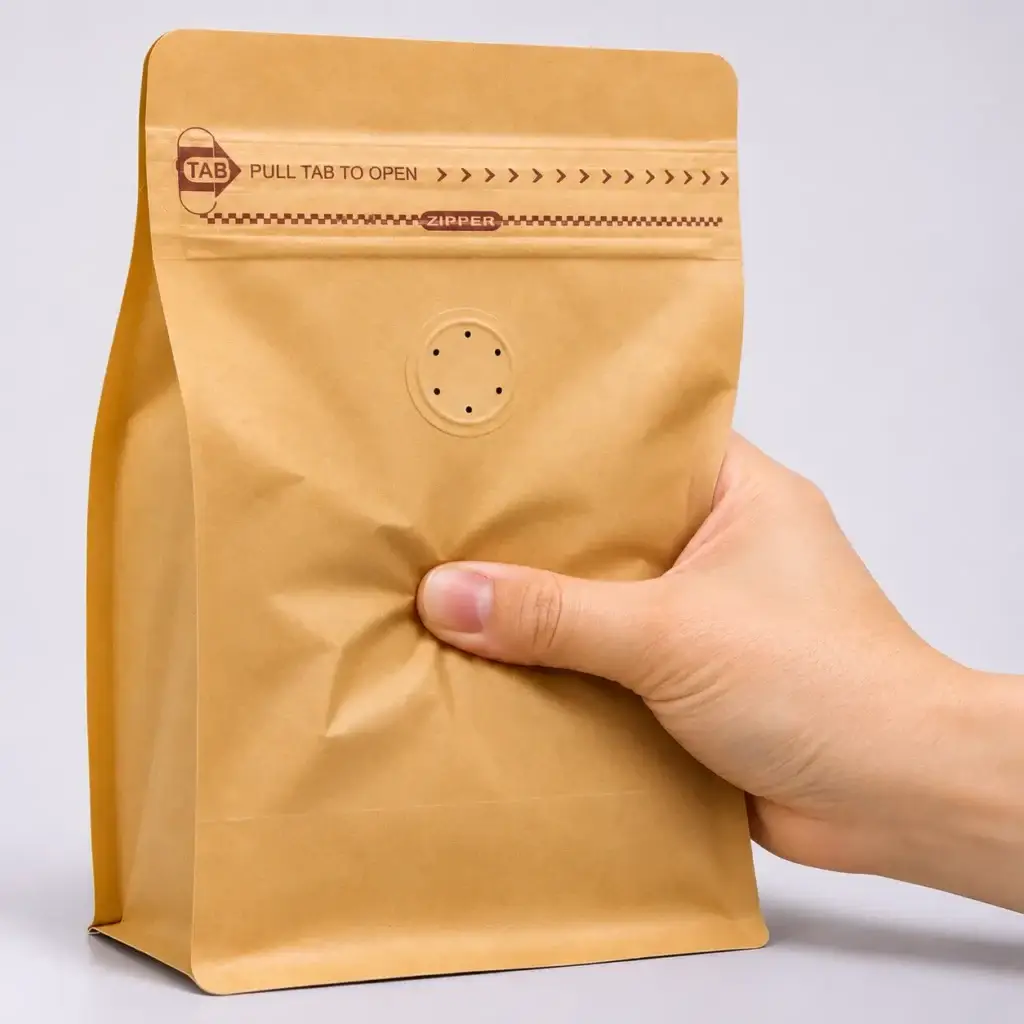
- Squeeze it. A lined bag resists and springs back. A paper-only bag crumples softly and stays creased.
- Look at the inner wall. Hold the opening to the light. A metallic, white, or glossy inner surface means film; a fibrous brown surface means paper only.
- Check the bottom seal. A laminated bag has a sealed band with a visible plastic edge. A paper bag has a folded or glued base.
- Ask for the structure. A serious supplier will tell you the layer stack — for example paper / metallized PET / polyethylene — and the weight of the film, not just the paper.
How to Specify the Right Kraft Coffee Bag?
Once you know the bag is a laminate, the specification is mostly about matching the film to the shelf life you need:
- Whole bean or ground. Ground coffee releases gas faster and stales faster, so it usually needs a stronger barrier and a valve.
- Shelf life target. A few weeks of local sales and a six-month export cycle need different film weights.
- Valve or no valve. Whole-bean bags packed soon after roasting need one; ground coffee in a very high-barrier bag may not.
- Print and finish. Kraft takes flexo and gravure print well, and a window or a matte varnish changes how much paper texture stays visible.
- Size and fill. The bag has to hold the net weight without the seal sitting in the coffee, so bag dimensions follow the fill weight.
Bring the coffee, the shelf life, and the market, and the structure follows from those three.
Frequently Asked Questions
Are kraft coffee bags plastic-free?
Most are not. A standard kraft coffee bag contains a plastic film lining and, usually, a plastic valve. Plastic-free versions exist, but they trade barrier performance for compostability or recyclability, so they suit shorter shelf lives.
Can kraft coffee bags be compostable?
Yes, with a compostable film instead of a conventional one. The paper and the film both need to be compostable, and the bag then needs industrial composting to break down in a reasonable time.
Do kraft coffee bags need a valve?
Whole-bean coffee packed within a few days of roasting does, or the bag will balloon and the seam will strain. Ground coffee and coffee that has rested long enough can go without, provided the film barrier is strong.
Final Thoughts
A kraft coffee bag is a paper bag only on the outside. The film inside is doing the work that keeps the coffee drinkable, and the paper is doing the work that makes people pick it up. Neither is decoration — but only one of them is visible, which is why the film is the part worth specifying carefully.
If you are choosing a structure for a new roast or a new market, send us the coffee type, the fill weight, and the shelf life you need, and we will come back with a layer stack that fits. You can also link back to our guide on the one-way degassing valve if the valve is the part you are unsure about.
Tell us your coffee type and shelf life — we will recommend the bag structure.
Visiting Shanghai in April 2027? We will be at WEPACK, booth E3D445. Message us “WEPACK” and we will pre-register you for free entry, hold a meeting slot, and have a sample bag waiting.